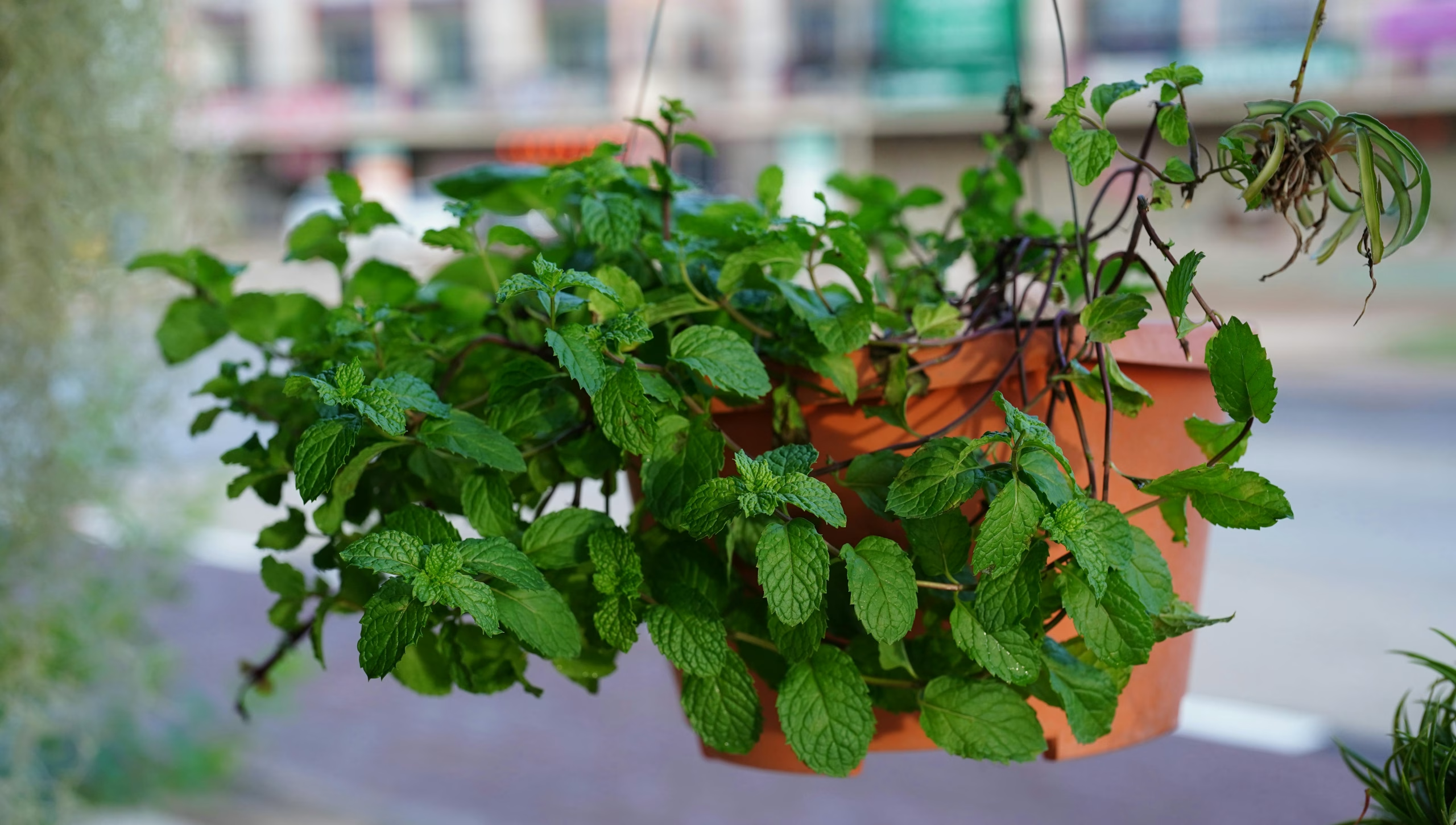
The Biggest Mistake People Make When Planting Mint in Pots (And How to Fix It)
Mint has a reputation for being completely indestructible. Ask any seasoned gardener for advice on planting it, and they will likely give you a stark warning: “Whatever you do, don’t plant it in the ground. It will take over your entire yard.”
Naturally, the universal solution is to plant mint in a container. It feels safe, controlled, and foolproof.
Yet, millions of home gardeners watch their potted mint thrive for a month or two, only to see it suddenly stall, grow thin and woody, develop tiny leaves, or mysteriously die off. If mint is practically a weed, why does it struggle so much in a container?
The truth is, while moving mint to a pot saves your yard, treating mint like a normal potted plant is the biggest mistake you can make. Here is why your potted mint is struggling, and the exact steps you need to take to unlock an endless, lush harvest.
The Anatomy of the Mistake: Why Your Pot is Suffocating Your Mint
To understand why traditional pots fail mint, you have to look at how the plant grows underneath the soil. Most standard houseplants grow roots that anchor deep into the earth, searching downward for moisture.
Mint doesn’t play by those rules.
Mint spreads via runners—aggressive, horizontal underground stems technically known as rhizomes. These runners shoot outward just below the surface of the soil to claim new territory, sending up fresh, leafy green shoots as they move.
[Traditional Deep Pot]               [Ideal Wide Pot/Trough]
   ❌ Narrow Surface                    ✅ Wide Surface Area
   ┌───┐   <- Shoots choke              ┌───────────────┐ <- Shoots spread
   │ █ │      each other                │ █   █   █   █ │    healthily
   │ █ │                                │               │
   └───┘   <- Deep soil goes            └───────────────┘ <- Shallow depth
              unused/soggy                                   is perfectly fine
When you plant mint in a traditional deep, narrow plastic or terracotta pot, those horizontal runners hit the container walls within weeks. Confused and restricted, they begin circling the perimeter, packing tightly together and choking themselves out.
Within a few months, your mint becomes severely root-bound. Because the roots have run out of lateral space, the center of the plant starves and dies out, leaving you with a handful of woody, bare stems and tiny, bitter leaves.
The Fix: Choose Surface Area Over Depth
Mint does not care about deep soil; its root system actively lives in just the top few inches of earth.
-
Stop using: Deep, narrow bucket-style pots.
-
Start using: Wide, shallow planters, window boxes, or bowls.
A container that is 12 to 16 inches wide but only 6 to 8 inches deep gives those horizontal runners the freedom to roam. More horizontal room means more new, tender leafy shoots popping up for your kitchen.
The Hidden Container Killers: Soil and Water
Because a potted plant has zero access to natural ground moisture or subterranean nutrients, its entire ecosystem is completely dependent on you. When it comes to mint, gardeners usually lean into two extremes: drowning it or starving it.
1. Heavy Garden Soil vs. Draining Mix
Mint naturally loves moisture, which leads many to believe they should use dense, heavy soil that holds onto water. However, using backyard garden soil or cheap, heavy topsoil in a container causes the dirt to pack down like concrete. This traps water, starves the roots of oxygen, and causes root rot.
The Solution: Always use a lightweight, premium potting mix. To maximize success, toss in a handful of perlite or coarse sand to increase aeration. The soil should feel like a wrung-out sponge: moist to the touch, but never muddy or waterlogged.
2. The Danger of “Sip Watering”
Giving your mint a tiny splash of water every single day is a recipe for weak roots. It encourages the root system to stay right at the very surface, making the plant incredibly vulnerable to heatwaves.
The Solution: Water your mint deeply until you see water actively running out of the drainage holes at the bottom of the pot. Then, do not water it again until the top inch of soil feels dry. If the stems begin to droop slightly, the plant is signaling that it’s thirsty—drench it, and it will perk back up within an hour.
The Pruning Rule: The Secret to Infinite, Bushy Mint
The final mistake happens during harvest time. When most people want a few mint leaves for a refreshing drink, a salad, or a tea, they simply walk over to the pot and pluck off the largest individual leaves.
This tells the plant to stop producing.
Plucking individual leaves leaves behind a bare, naked stem that eventually turns brown, hardens, and dies. To keep your potted mint exploding with growth and tasting sweet instead of bitter, you have to prune the stems hard.
       [Where to Cut]
            Leaf
             │
       ───┬──┴──┬───
          │  ✂️  │   <-- Cut stem just above the node
       ───┴──┬──┴───
          ┌──┴──┐
          │  █  │   <-- Two brand-new branches
          │  █  │       will shoot out from here
How to Properly Harvest Mint:
-
Locate a long stem and track it down to a leaf node (the joint where two leaves grow out opposite each other).
-
Use a sharp pair of scissors to snip the stem just above that set of leaves.
-
Look closely at that joint: you will see two microscopic green buds already forming. By removing the main stem above them, you redirect all the plant’s energy into those buds.
Wherever you make one clean cut, the plant will split and grow two brand-new branches. The more aggressively you chop the stems, the bushier, leafier, and healthier your potted mint will become. Never be afraid to cut your mint back by half if it starts looking wild or leggy.
The Golden Rules for Potted Mint Success
Growing world-class mint at home doesn’t take a master’s degree in agriculture—it just requires understanding the plant’s natural survival instincts. Keep these quick rules in mind:
| Factor | What Mint Hates ❌ | What Mint Loves |
| Pot Shape | Deep and narrow | Wide and shallow (troughs, window boxes) |
| Soil Type | Heavy garden soil, clay | Fluffy, well-draining potting mix with perlite |
| Harvest Style | Plucking individual leaves | Snipping whole stems just above leaf nodes |
| Sunlight | Complete, dark shade | 4–6 hours of bright, indirect morning sunlight |
By giving your mint room to run horizontally, providing a well-draining soil mix, and harvesting by the stem rather than the leaf, you will enjoy a continuous, fresh supply of mint all season long—all while keeping your garden perfectly safe from an invasion.
#GardeningTips #GrowMint #ContainerGardening #HerbGarden #GardeningMistakes #HowToGrowMint #PottedPlants #UrbanGardening